

In the heart of Bharat lies a divine truth: Gaumata (the sacred cow) is not just an animal but the mother of health, purity, and sustainability. For thousands of years, Indian civilisation has revolved around the cow. Gaushalas (cow shelters) were once the centres of health, agriculture, and spiritual practice. Our ancestors did not depend on chemical medicines, artificial foods, or factory farming. Instead, they used Panchgavya, the five divine elements from the cow, i.e. milk, curd, ghee, cow dung, and cow urine, to nourish the body, purify the environment, and heal the sick.
In the heart of Bharat’s villages lies a sacred, humble, and powerful force, Gaumata. For centuries, she has nourished us, healed our lands, and formed the backbone of the rural economy. But we ignored her in the interest of progress. Jeena Green, a movement inspired by Acharya Manish Ji, reminds us that the path to a clean, healthy, and self-reliant India lies not in machines but in nature and cows.
Jeena Green – Where Gobar Becomes Gold, and Villages Become Atmanirbhar
The Cow is Not Just Cattle; She is the Key to Clean Energy, Organic Farming, and Village Empowerment. The cow, calm and pure, stands tall in the green fields. She is not just an animal; she is “Gau”, our living heritage. In her lies the power to clean the air, purify the soil, light homes, and generate employment. Jeena Green is a unique initiative that uses the ancient wisdom of Gau-based (cow-based) living and blends it with today’s rural needs.
What is Jeena Green?
Jeena Green is a sustainable and eco-friendly movement that builds Gaushalas (cow shelters) not just for care but for rural development. With every cow, Jeena Green creates a system where cow dung (gobar) is turned into bio-CNG, organic manure, and natural products, supporting both clean energy and organic farming.
It is an initiative that transforms the Gaushala into a green factory, zero waste, 100% natural, and deeply rooted in Indian values.
The Vision of Acharya Manish Ji
Acharya Manish Ji, a strong believer in natural living and Ayurveda, started Jeena Green to awaken India’s villages. His idea was simple but revolutionary:
“अगर गाँव बचेगा तो देश बचेगा। और गाँव तब बचेगा, जब गाय बचेगी।”
(If the village survives, the country survives. And the village will survive only when the cow survives.)
He saw how chemical fertilisers, diesel generators, and plastic pollution were damaging not just the environment but also the health of people. That’s why he returned to the roots, the cow, the earth, and the farmer.
Why Cows? Why Jeena Green?
The Indian cow has scientific power in addition to being revered in our scriptures.
- Cow dung (Gobar) is a rich source of methane, which can be used to make bio-CNG, a clean and green fuel.
- Cow urine (Gomutra) has medicinal properties and is used in Ayurvedic treatments.
- Compost from Gaushala waste is much better than chemical fertilisers, it restores the fertility of the soil and prevents cancer-causing toxins in food.
- Cow dung can also be used to make eco-friendly diyas, bricks, incense sticks (dhoop), and even paint (गोबर पेंट).
Jeena Green uses all these elements to build a cow-based rural economy. It creates jobs for villagers, energy for homes, and nutrition for farms all through Gau-Seva (cow service).
Bio-CNG: Turning Gobar into Energy
Bio-CNG plants are among the most crucial components of Jeena Green. Cow dung is usually disposed of or allowed to dry. But Jeena Green collects it and processes it in biogas units, where it turns into:
- Methane gas, also known as Bio-CNG, is utilised for vehicle operation and cooking.
- Slurry, a powerful organic manure that is free for farmers
- Electricity, to run homes, pumps, and rural industries
This clean energy is cheaper than LPG or petrol and does not harm the environment. It’s a true example of waste to wealth.
Empowering Gaushalas and Villages
Jeena Green doesn’t just build gaushalas. It builds vibrant rural ecosystems. Every Gaushala becomes a:
- Centre for organic farming
- Source of rural employment (youth, women, elderly)
- Training centre for sustainable practices
- Provider of Ayurvedic products made from Gomutra and Gobar
Villagers are trained to make cow dung products, natural pesticides, and fertilisers. Women can work from home, making dhoop or soaps. Youths can manage biogas units. Farmers can grow poison-free crops.
Environment + Economy = Jeena Green
Today, India is facing a climate crisis. Pollution, plastic waste, dying rivers — all are the result of unnatural lifestyles. Jeena Green shows the world that traditional India had the solution all along.
- No smoke from burning fossil fuels
- No cancer from chemical fertilisers
- No garbage from plastic
- Only clean air, clean energy, clean farms
It is environmental protection with economic growth – the true Green Revolution of Bharat.
The Cow: A Silent Warrior
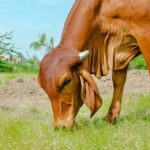
The picture of the cow in the green field is more than a visual. It is a silent warrior standing against pollution, disease, and unemployment. It represents the ecological and spiritual future of India. The cow doesn’t ask for anything; she only gives milk, medicine, manure, and moksha.
Acharya Manish Ji is giving Jeena Green the respect he is due and ensuring that India has a future that is Swachh, Swasth, and Sashakt (strong, healthy, and clean).
Conclusion: Join the Jeena Green Movement
It is said in the Vedas, “सर्वे रोग निवारणं गावो भवन्तु” “Sarve roga nivaranam gaavo bhavantu” “सभी रोगों के निवारण के लिए गौ माता सहायक बनें।” may the cow be the remover of all diseases.
India doesn’t need foreign technologies to rise. It needs to respect its roots: the cow, the soil, and the village. Jeena Green is not just a venture. It is a movement, a return to Panchgavya, Ayurveda, and a Gaushala-based economy.
Let us come together to support this revolution. Let the cow not just survive but thrive. Let her become the centre of India’s new green economy.

No approved comments yet.